At Glowskinhub.com, we believe beauty isn’t just a look—it’s a feeling

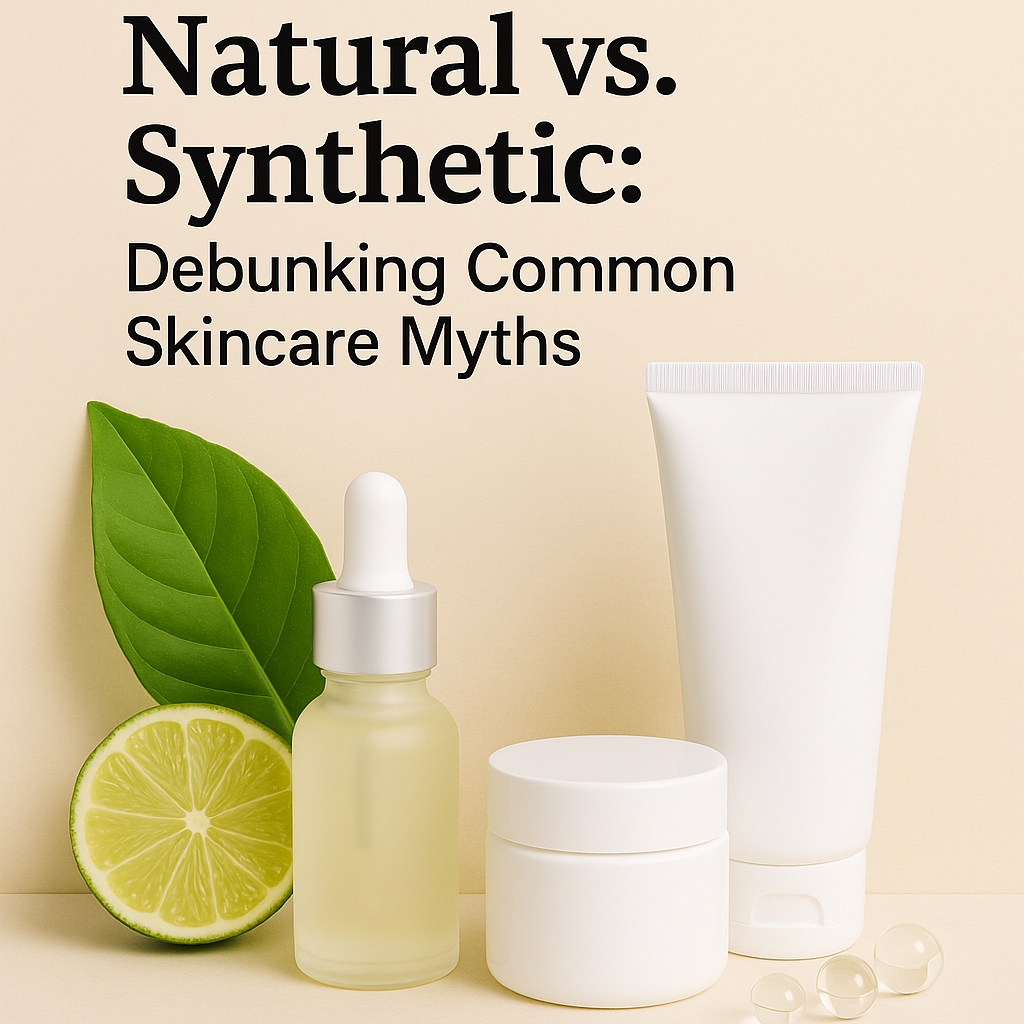
Natural vs. Synthetic: Debunking Common Skincare Myths

In the world of skincare, the terms “natural” and “synthetic” are frequently used and widely debated. Consumers are often faced with an overwhelming array of products, each claiming to deliver miracle results. But as awareness about ingredients grows, so does confusion about what makes a product truly effective or safe. Here, we will explore the differences between natural and synthetic ingredients in skincare, debunk common myths, and help you make informed decisions for your Skin.
Understanding Natural and Synthetic Ingredients
Natural Ingredients
Natural skincare products are typically derived from plants, minerals, and other naturally occurring substances. Common ingredients include essential oils, botanical extracts, and minerals. Advocates of natural skincare believe that products made from these sources are gentler on the Skin and less likely to cause irritation.
Synthetic Ingredients
Synthetic skincare products contain chemicals that are artificially created in laboratories. These ingredients can be engineered to target specific issues, offer increased stability, or provide enhanced effectiveness compared to their natural counterparts. Common synthetic ingredients include retinoids, peptides, and various preservatives.
Myths About Natural and Synthetic skincare
Myth 1: Natural Ingredients Are Always Better
The belief that natural ingredients are superior is pervasive. While natural products can be beneficial, they are not inherently superior to synthetic ones. For example, essential oils, which are natural, can cause allergic reactions in sensitive individuals. Additionally, natural products can lack efficacy in some cases because they don’t contain the same concentration of active ingredients that synthetic formulations may offer.
Myth 2: Synthetic Products Are Always Harmful
Another common myth is that synthetic products are harmful and should be avoided. While some synthetic ingredients can indeed be irritating or harmful, many are thoroughly tested for safety. Ingredients like hyaluronic acid, often synthetically created, are highly effective at hydrating the Skin and are widely regarded as safe.
Myth 3: All Natural Products Are Free of Chemicals
It’s important to note that “natural” does not necessarily mean “chemical-free.” All products, whether natural or synthetic, consist of chemicals. Water is a chemical, for example. Some natural ingredients can even include harsh chemicals when they undergo processing. The key is to look at the type of chemicals used rather than labeling the product as merely “natural” or “synthetic.”
Myth 4: Natural Products Are Greener and More Sustainable
While natural ingredients may be perceived as more environmentally friendly, this isn’t always true. The extraction of some natural resources can lead to environmental degradation, deforestation, or biodiversity loss. On the flip side, some synthetic ingredients can be manufactured in ways that minimize environmental impact.
Myth 5: You Need to Spend More for Quality
The belief that natural products are always more expensive and of higher quality can mislead consumers. While it is true that some high-end natural products can be costly, this isn’t always the case. Many effective synthetic products are affordable and offer remarkable results.
Effective skincare: What to Look For
Ingredients Over Labels
When choosing skincare products, focus on the ingredient list rather than the label claiming “natural” or “synthetic.” Look for active ingredients that target your specific Skin concerns—whether they are natural or synthetic. For example, if you’re looking for anti-aging benefits, studies have shown that retinoids may be more effective regardless of whether they’re derived from natural or synthetic sources.
Allergies and Sensitivities
Individuals with sensitive Skin should be cautious with both natural and synthetic ingredients. Always perform a patch test when trying a new product, especially if it contains essential oils or strong synthetic compounds.
Quality and Source
Where the ingredients are sourced can impact their efficacy and safety. Organic certifications or third-party testing can provide reassurance about product quality, regardless of whether they’re natural or synthetic.
Enhanced Formulations
Many skincare lines successfully combine both natural and synthetic elements to create effective formulations. Brands are increasingly recognizing the value of synergizing both types of ingredients to harness the benefits of each. This approach can help achieve enhanced stability, safety, effectiveness, and a lower environmental impact.
Conclusion
Understanding the differences between natural and synthetic ingredients is crucial to making informed skincare choices. While both have their virtues and drawbacks, the key lies in the specific ingredients, how they function, and how they align with your skincare needs. Debunking common myths can help you find products that truly work for you without being overly biased towards one category.
FAQs
1. Are natural skincare products free from side effects?
No, natural products can still cause side effects, especially if they contain irritating ingredients like essential oils.
2. Can synthetic ingredients cause allergic reactions?
Yes, synthetic ingredients can lead to allergic reactions in some individuals, just like natural products.
3. Are natural products better for sensitive Skin?
Not necessarily. Some natural ingredients can be irritating, while others may be very gentle. Always check specific ingredients.
4. Why do synthetic products sometimes have a longer shelf life than natural products?
Synthetic products often contain preservatives that help prolong shelf life, while some natural products may lack these.
5. Is it possible for a product to be both natural and effective?
Absolutely! There are many effective natural products available, but it’s essential to evaluate based on specific ingredients rather than labels.
By taking a balanced approach and considering the effectiveness and safety of both natural and synthetic ingredients, you can navigate the skincare landscape with confidence.